Word Riddle: Offline Word Game
- 4.8
- Rating
- 10.00M
- Installs
- Free
- Price
 Analysis by App-foxy
I spent time with Word Riddles - Offline Word Ga and found a trivia game that understands the value of a quick mental break. It presents short word-based challenges, asks me to interpret clues, and rewards the simple satisfaction of finding the answer. That sounds modest, but it makes the game easy to pick up when I have only a few minutes and still enjoyable when I want a longer run of puzzles.
Developed by Magic Word Games, this free game belongs to the trivia category and is suitable for everyone. It has reached over ten million installs, with an average rating of 4.8 from around one hundred seventy-eight thousand ratings. Those figures suggest that its straightforward format has connected with a broad audience, although popularity alone does not make every puzzle equally enjoyable.
My main focus while using it was not just whether the riddles were entertaining. I also looked at how comfortably the game works for different reading abilities, motor habits, attention spans, and everyday situations. The strongest part of Word Riddles is its low-pressure, immediately understandable format; the main weakness is that wordplay can become difficult for reasons unrelated to actual reasoning skill.
You May Also Like

 Blood Strike: 2.5 Anniversary
Blood Strike’s Loadouts Turn Every Drop Into a Tactical Gamble
A close look at Blood Strike’s custom loadouts: how fast access to signature weapons reshapes its battle royale rhythm, rewards preparation, and narrows the gap between fights.

 Pandora - Music & Podcasts
Pandora’s Music Is Easy to Start, but Harder to Recover
Pandora’s strength is its low-effort path from a seed to a station. Its weak spot is how much confidence it asks you to place in connection, setup, and quiet recovery.

 8 Ball Pool
 Is Built on Rivalries, Rematches, and Routine
A close look at the rivalries, rematches, shared routines, and unanswered safety questions that turn a quick pool match into a persistent mobile community.

 Samsung Music
’s Quiet Strength Is Playing What You Already Own
Its reach comes less from spectacle than from dependable access to a personal library. That simplicity is both the app’s strongest retention engine and its ceiling.

 AccuWeather: Weather Radar
AccuWeather Review: A Quick, Clear Forecast for Everyday Decisions
For everyday plans, the best forecast is the one you can understand quickly. AccuWeather makes rain timing, radar, and local conditions easy to act on, with a few trade-offs.

 Hill Climb Racing
Why Hill Climb Racing Still Turns Crashes Into One More Run
A tiny car, a bumpy hill and one more upgrade: Hill Climb Racing keeps resurfacing because its simple chaos makes every near-miss feel personal.
More From Our News Desk



How the puzzle experience feels in everyday use
I found that the game’s most useful quality is how a single written clue can turn a spare minute into a small exercise in interpretation. In this section, I focus on how that format fits ordinary pauses and why rereading thoughtfully can matter more than answering quickly. That everyday rhythm also makes it easier to see which situations suit the puzzles best.
Readable clues and uncomplicated navigation
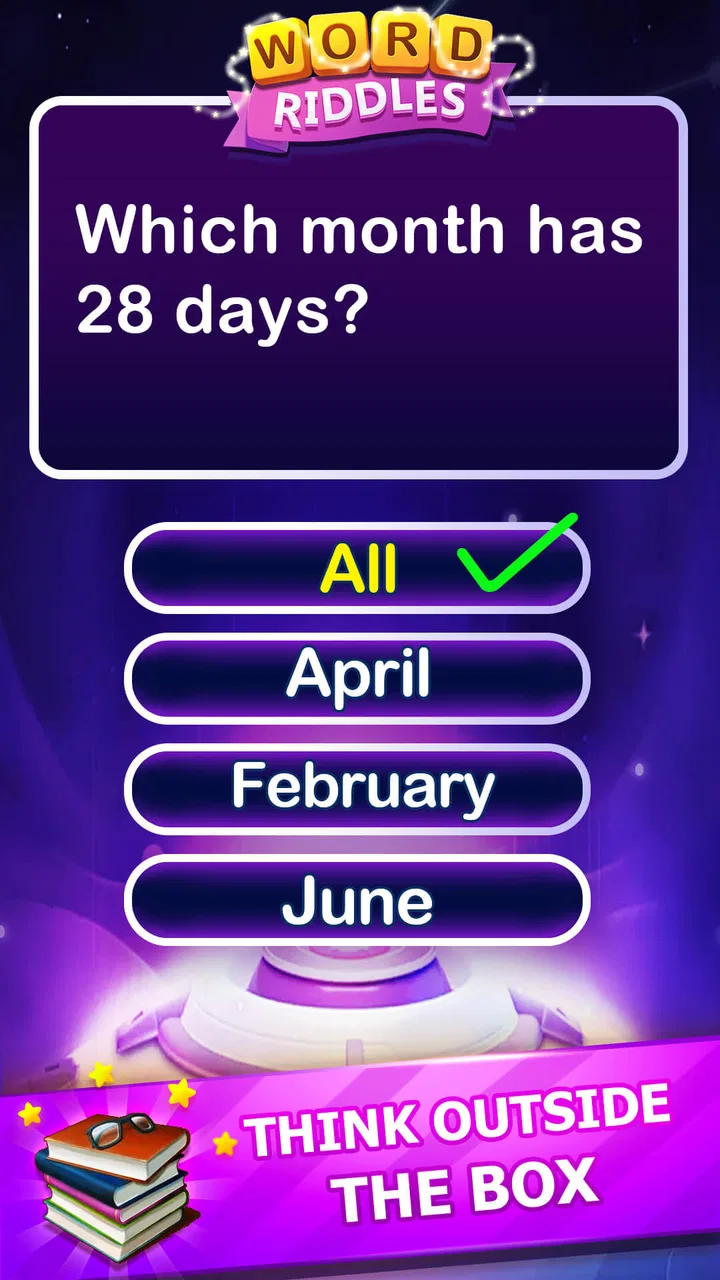
The game’s basic structure is easy to understand. I can open it, read a clue, think about possible meanings, and enter an answer without learning a complicated control system first. That matters for a trivia title aimed at everyone, because a player should be able to concentrate on the riddle rather than on menus, icons, or layered instructions.
Word Riddles works best when I treat each puzzle as a small language exercise instead of a speed test. I read the wording once for its obvious meaning, then again while looking for a pun, a double meaning, or an unusual interpretation. This two-pass habit is useful for younger players and for anyone who finds dense clues tiring. It also reduces the temptation to tap random answers simply because the first reading did not make sense.
The presentation is most comfortable when I use it in a quiet setting with the device held at a normal reading distance. Because the central activity depends on written clues, readability is more important here than it would be in a picture-based quiz. A player with reduced vision may need to adjust the device’s own text or display settings, increase the viewing distance, or avoid glare. Those are practical accommodations, but they also show that this is not a game where visual information can be ignored.
Navigation feels approachable for someone who is new to mobile games. I did not need to understand a large collection of systems before starting a puzzle. That simplicity is a genuine advantage for children, older players, and people who rarely play games on a phone. It also makes the title suitable for passing between family members, since the rules can be explained in a few sentences.
There is a trade-off in that simplicity. Players who enjoy elaborate progression maps, character collections, timed competitions, or deep customization may find the experience plain. The appeal comes from solving one clue after another, not from building a complicated virtual identity. I would choose it for mental stimulation, not for a rich role-playing layer around the questions.
Why the wording can help or hinder different players
Word puzzles can be more inclusive than fast action games because they do not depend on rapid reflexes. I can pause to think, reread a clue, and approach a difficult answer from another angle. That makes the game a reasonable choice for players who prefer deliberate interaction or who find quick tapping uncomfortable.
At the same time, the language itself creates a barrier. A player may know the subject of a clue but still struggle with spelling, vocabulary, idioms, or the particular style of wordplay being used. Someone learning English may understand the general idea while missing the intended answer because the clue depends on a phrase that is not familiar. In that situation, the challenge measures language familiarity as much as deduction.
I found it helpful to separate “I do not know the answer” from “I do not understand the clue.” If the wording is clear but the fact is unfamiliar, I keep reasoning. If the sentence feels ambiguous, I reread it aloud or break it into individual words. This small distinction prevents frustration and is especially useful when playing with a child, a second-language reader, or someone who processes written language slowly.
For shared play, I would let each person explain what they think the clue means before anyone enters an answer. That turns a potentially frustrating puzzle into a conversation about language. It also gives players with different strengths a fairer role: one person may notice a pun, while another may recognize the factual reference.
Motor and sensory considerations
Compared with a reflex-heavy trivia game, Word Riddles places relatively little pressure on reaction speed. The important action is reading and entering a response, so a player who needs extra time can usually approach the puzzle at a comfortable pace. That makes it more suitable for relaxed play than games built around rapid rounds or precise swipes.
Typing can still be the point where the experience becomes less comfortable. Entering an answer requires enough control to select letters accurately, and mistakes can happen more often on a small screen. I recommend using the largest comfortable keyboard layout and holding the phone in the position that gives the most stable support. For someone with limited dexterity, a larger device or an alternative input method supported by the operating system may make the game easier to use.
Players who are sensitive to bright screens should be cautious about long sessions. A text-centered game encourages close viewing, and that can become tiring in a dark room or under strong glare. I get a better experience by lowering the screen brightness to a comfortable level, taking regular breaks, and avoiding play when my eyes are already strained. These habits are not specific settings inside the game, but they make a noticeable difference to this kind of reading-heavy activity.
Sound is not the reason to choose this title. The core of the experience is the written clue and the answer, so I can enjoy it in places where audio would be inconvenient. That is useful on public transport, in a waiting room, or beside someone who is sleeping. It also means that players who do not want a noisy game can use it as a quieter alternative to animated quiz apps.
However, visual and language access remain closely connected. A player who cannot comfortably read the clue may not get much from the game even if the interaction itself is simple. I would not recommend choosing it solely because it avoids rapid action; the reading demand is substantial and central to every puzzle.
Using it during short breaks and shared moments
A realistic use case is a short wait before an appointment. I can open the game, solve a few clues, and put the phone away without needing to remember a complex storyline or prepare a long session. It also fits a coffee break, a quiet commute, or a few minutes at home when I want something more engaging than scrolling through social media.
The same format works well for family play, but the age rating should not be mistaken for a guarantee that every clue will be equally easy for every child. “Everyone” makes the game broadly approachable, yet vocabulary and reading ability still vary widely. I would play alongside a younger child rather than hand over the phone and assume the experience will be self-explanatory. The conversation can be more rewarding than simply checking whether the answer is right.
It can also suit adults who want a light brain exercise without committing to a full strategy game. I like that the task has a clear boundary: read, reason, answer, and continue. Still, anyone seeking formal learning, a structured language course, or carefully graded educational content should look elsewhere. This is entertainment built around word riddles, not a replacement for instruction.
The free price makes trying it easy, and the game includes in-app purchases ranging from ninety-nine cents to nine dollars and ninety-nine cents per item. I would begin without buying anything and decide whether the normal puzzle flow feels satisfying first. That is particularly important for families, where a free download can still lead to purchase decisions that should be discussed before a child plays.
Where the usual alternatives may be better
Word Riddles sits between several familiar types of mobile entertainment. Compared with a crossword, it feels more approachable because I do not need to manage a full grid or plan intersecting answers. Compared with a traditional general-knowledge quiz, it focuses more heavily on interpretation and vocabulary than on recalling a wide range of facts. Compared with a word-search game, it asks me to understand a clue rather than scan a board for hidden letters.
That distinction helps clarify who should choose it. If I want a calm, clue-driven activity that can be played in small pieces, this is a good fit. If I want a visual puzzle with minimal reading, a word-search or matching game would probably be more comfortable. If I want competitive timing, live opponents, or a large knowledge database, a conventional quiz app may provide more variety.
The offline emphasis in the product name is appealing for people who want a game for travel or unreliable connections, but I would still think of it primarily as a compact word-puzzle companion rather than a complete travel entertainment library. It is best when I am happy to focus on the individual riddles instead of expecting constant novelty from several different game modes.
Small habits that make difficult riddles fairer
My most useful strategy is to avoid guessing from the first keyword. Riddle writers often place the obvious word in the clue to steer me toward a familiar answer, while the real solution depends on a second meaning. I look for words that could describe an object, an action, and an idea at the same time. That approach produces better answers than repeatedly entering the first association that comes to mind.
I also keep a mental list of clue types. Some clues invite a literal object, some depend on a phrase, and others ask me to reinterpret a common expression. Once I identify the likely type, I can narrow the possibilities without needing to search randomly. This is a useful technique for players who become overwhelmed by open-ended questions.
For group play, I would give each person a different role instead of letting the fastest typist dominate. One player can read, another can suggest alternate meanings, and a third can check the spelling before submission. This makes the game more accessible to someone who reads slowly or has difficulty typing, while preserving the central challenge.
Another practical tip is to stop after a genuinely frustrating sequence rather than treating persistence as a requirement. Because the game is built from individual riddles, taking a break can reset the way I interpret the wording. Returning later often works better than repeatedly forcing the same answer while tired. That is a strength of the short-puzzle format, but only if I use it as a flexible activity rather than a test of endurance.
Remaining barriers and who should skip it
The clearest barrier is dependence on written language. Players with dyslexia, limited vocabulary, reading fatigue, or low confidence in English may experience a larger challenge than the game’s simple controls suggest. The title can still be enjoyable with support, but I would not describe it as equally accessible to every reading ability without qualification.
Spelling can create a second layer of difficulty. A player may solve the riddle mentally and then lose momentum while entering the answer. I would be more cautious about recommending it to someone who wants purely conceptual puzzles without any typing demand. A spoken trivia game or a visual logic game may be a better alternative in that situation.
The game is also not the right choice for people who need a highly structured learning experience. It may encourage flexible thinking, but it does not replace a vocabulary curriculum or a diagnostic tool. Likewise, players who dislike ambiguity may find some riddles irritating rather than clever. The satisfaction depends on accepting that the intended answer may not be the first reasonable answer suggested by the wording.
Purchases are another point for families to manage. The game is free to start, but the presence of optional items means I would review purchase controls on the device before allowing unsupervised play. That is a simple precaution, especially when the age rating makes the game appealing to children.
My inclusive verdict after playing
After using Word Riddles, I see it as a friendly, low-pressure trivia game with a clear identity. Magic Word Games keeps the focus on clues, interpretation, and the small reward of solving a word problem. Its broad age rating, free entry point, and large player base make it easy to try, while its average rating of 4.8 shows that many people find the format satisfying.
My recommendation is strongest for patient readers who enjoy language-based challenges and want a game that fits into short, quiet sessions. I would recommend playing with a child or second-language reader rather than assuming every clue will be equally accessible, and I would adjust the device setup for anyone who finds small text or keyboard entry tiring.
I would skip it if I wanted fast competition, minimal reading, formal education, or purely visual puzzles. For everyone else, it is a worthwhile free download to test without a large commitment. Word Riddles does not remove every barrier associated with word games, but it makes the basic activity simple enough to invite a wide range of players. In my experience, that balance is its real strength: it gives me something thoughtful to do without demanding speed, noise, or a long session.
FAQs for Word Riddle: Offline Word Game
01What is Word Riddles - Offline Word Ga about?
Word Riddles - Offline Word Ga is a challenging and engaging word puzzle game where players solve various riddles and puzzles to progress. It's designed to test your vocabulary, lateral thinking, and problem-solving skills. The game can be played offline, making it perfect for on-the-go entertainment without needing an internet connection.
02Is Word Riddles - Offline Word Ga free to play?
Yes, Word Riddles - Offline Word Ga is free to download and play. However, it may offer in-app purchases for hints or additional content. These purchases can enhance your gaming experience but are not necessary to enjoy the full game. Always check the app's store page for detailed pricing information.
03Can I play Word Riddles - Offline Word Ga without an internet connection?
Absolutely! One of the key features of Word Riddles - Offline Word Ga is its offline capability. Once downloaded, you can enjoy solving puzzles anytime, anywhere, without needing to be connected to the internet. This makes it an ideal game for travel or when you're in areas with limited connectivity.
04What age group is Word Riddles - Offline Word Ga suitable for?
Word Riddles - Offline Word Ga is generally suitable for all age groups, particularly those who enjoy word puzzles and brain teasers. The game is family-friendly, with challenges designed to engage both young players and adults. However, younger children might need some assistance with more complex riddles.
05Are there any advertisements in Word Riddles - Offline Word Ga?
Yes, like many free-to-play games, Word Riddles - Offline Word Ga may include advertisements. These ads help support the developers and keep the game free for users. Some ads can be removed through in-app purchases if you prefer an ad-free experience. Check the app settings for options to manage ad visibility.
Pros
- Engaging puzzles for all skill levels.
- Offline mode for on-the-go play.
- Simple
- intuitive user interface.
- Regular updates with new levels.
- No in-app purchases needed.
Cons
- Limited hints available for tough levels.
- Ads can be distracting at times.
- Requires frequent updates for new content.
- Repetitive themes in some puzzles.
- No multiplayer or social features.

Word Riddle: Offline Word Game
Gallery